
Gum Disease Treatment – Coppell, TX
Achieve Healthy Gums for a Beautiful Smile
 Gum disease is the number one cause of tooth loss in adults. In fact, recent studies have confirmed that patients with gum disease are twice as likely to develop a range of systemic illnesses like heart disease, diabetes, stroke, and Alzheimer’s, and it may even lead to pre-term birth and low birth weight for babies. However, with regular cleanings and specialized gum disease therapy, our team can help patients control this condition and achieve a healthier smile. Here’s a quick look at how gum disease treatment works from the friendly staff at Sandy Lake Dental & Orthodontics.
What Is Gum Disease?

The first stage of gum disease is called gingivitis, which is characterized by inflammation, and this can usually be reversed with improved oral hygiene practices. However, unaddressed gum disease will eventually develop into a serious infection called periodontitis, and this will result in tooth loss if left untreated. Men, seniors, and those living below the federal poverty level are more likely to experience gum disease, and risk factors include poor oral hygiene, tobacco use, genetics, conditions that compromise the immune system, certain medications, and pregnancy.
Symptoms of Gum Disease

When gum disease is still in the gingivitis stage, patients may experience seemingly negligible symptoms like bad breath, redness, tenderness, or irritation. However, the symptoms of periodontitis are much more noticeable and destructive, and they include:
- Gums that bleed when you brush
- Swollen red gums
- Painful chewing
- Dental sensitivity
- Gum recession
- Changes in bite alignment
- Loose teeth
How Do We Treat Gum Disease?

Most of the time, gingivitis can be treated with improved oral hygiene at home and a thorough dental cleaning at our office. However, once the infection has advanced to the stage of periodontitis, it will have to be resolved or managed with more intensive gum disease treatments. After a brief consultation, we may recommend:
Scaling & Root Planing
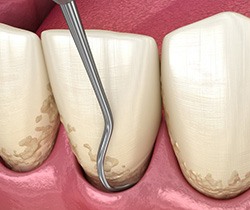
Scaling and root planing is a two-step process designed to eliminate infectious material from the gums and dental tissue. The scaling stage involves our dentist systematically cleaning your gum line to eliminate built-up plaque and bacteria. After that, root planing will be used to gently smooth out the roots of your teeth to make it harder for bacteria to reinfect the tissue and help your gums reattach to your dental structure. Most of the time, a scaling and root planing treatment can be completed in only two visits.